Your bag is empty.

The artist discusses rejecting the gender binary, Robyn, and their new album, 'Something Like a War'
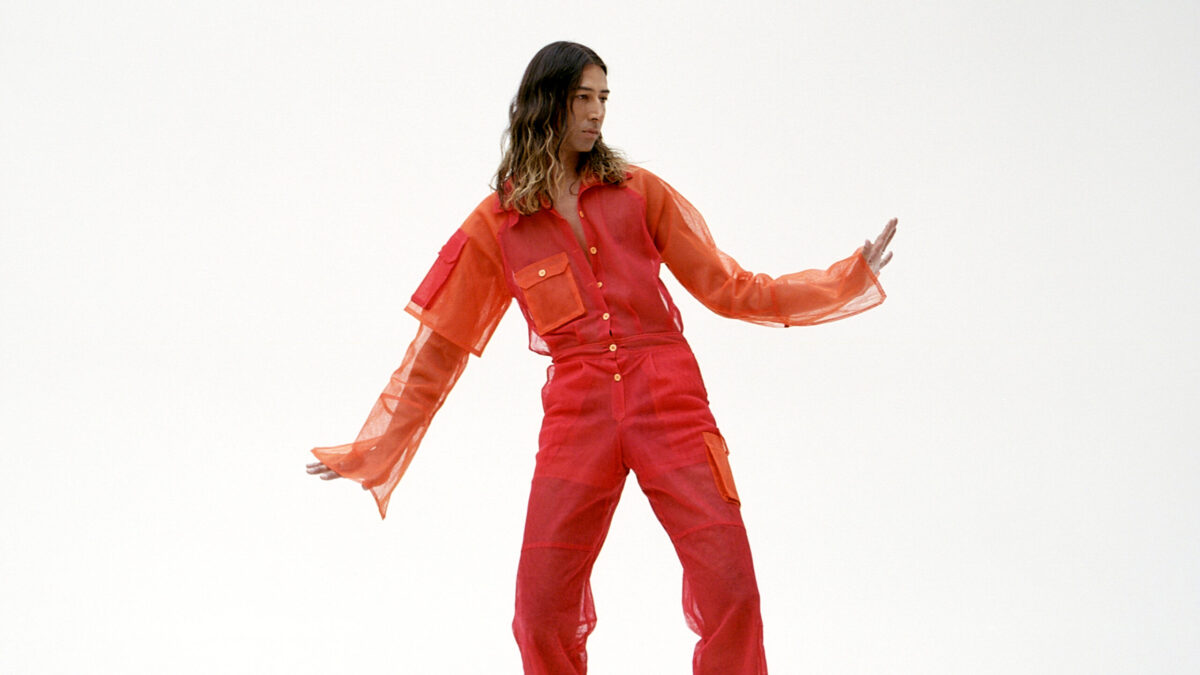
Adam Bainbridge “would happily not answer any more questions about my artist name ever again.” It’s been nearly a decade since the British Asian musician—who “rejects the binary” of gender—released their debut single under the stage name Kindness and they reckon they’ve “had to explain my name in approximately six thousand different ways, while still trying to stay true to what my original intention was.” Bainbridge mock-dramatically sighs over well-iced Diet Cokes in an unassuming east London pub. “And do you not think things can sometimes lose their significance when they’re explained?” They’re immediately relaxed, candid and astute despite having just come off a long photo shoot on an uncomfortably hot day in July—a skill of a true performer.
I’m not surprised by Bainbridge’s special sort of charm and perseverance. Their first two studio albums are thoughtful and precise, and earning the opportunity to co-produce for heavyweights like Robyn, Blood Orange and Solange can’t come easy. But their third compilation, Something Like a War (out now) is representative of their constant evolution—challenging, yet again, what listeners knew could exist between genres. It’s soothing, alternating between Bainbridge’s own vocals and those of classy collaborators like soul singer Jazmine Sullivan, Swedish artist Seinabo Sey, and yet another welcome collaboration with Robyn. It’s an uncommonly warm, complex, and emotive modern disco album.
Some of the ear-snagging lyrics almost sound like mantras. “Build your people, make them equal, raise up your different ones,” Bainbridge sings on “Raise Up,” a track which feels like a rallying cry for marginalized communities. The equally well-meaning “Softness As a Weapon” offers advice that many of us could learn from: “Don’t try to be so tough, undo your hardness, that’s when you fall in love.”
And when Sullivan sings, “I want your love, not your money or paycheck,” on “Hard to Believe”, it feels especially poignant given Bainbridge’s professional challenges since releasing their last album, Otherness (2014). “I think I came quite close to proper financial fucked-up-edness,” Bainbridge reports, explaining the move to create their own label, called Female Energy. “I could have really messed the whole thing up because of problems with accounting and legal stuff and changing management,” they say, also acknowledging they’re far from the only musician to have experienced this kind of financial fright. “But in my case, despite having built a career decently over two albums, by the end of my second album campaign, things were still a bit of a mess and it all came to a head.”
For a while, the thought of creating their own label—not knowing where it would get released or who would be earning a percentage of the profits— filled Bainbridge with dread. So they found alternative revenue streams, hosting a monthly radio show for Red Bull Music Academy, teaching music at Goldsmiths University in London, and co-producing tracks on Blood Orange’s Cupid Deluxe and Freetown Sound albums, Robyn’s Honey and Solange’s A Seat at the Table.
Thanks to what Bainbridge humbly calls their “almost incidental” contribution to the latter’s standout track, “Cranes in the Sky,” Kindness can now bill themselves as a Grammy-winning producer. “I think that helps my career because the music industry can be quite a reductive and lazy place,” Bainbridge says. “I doubt anyone that’s ever worked with me on the industry side of things has taken the time to read an interview I’ve done. Shit, maybe they haven’t even read my Wikipedia. But if I can write ‘Grammy-winning producer’ in my Instagram bio, it’s a snapshot of what I can do, and it just makes work opportunities a little bit easier.”

Over time, Bainbridge’s financial situation improved “extremely slowly” by “just chipping away at it” with a succession of managers who fled the situation when they realized the extent of the mess. “I’m proud to be here now,” they say. “This is a self-released album that I funded through DJing and fashion work and hosting a radio show. And I recorded it while living in one of the most stupidly expensive cities in the world—it’s not like I was living in a penthouse, but you know, New York is just so expensive. So to have gotten to this place with a great album that I love, that’s something I’m proud of.”
Logistically as well as financially, Something Like a War proved complicated to make. “This album really was recorded all over the place—a little bit here; a little bit there,” Bainbridge explains. “Like, I had 600 different hard drives, which is so difficult to keep track of. In the end I had all of these charts covering the walls of my studio in New York reminding me where things were—like, ‘you’ve already recorded this horn section, so don’t go and record it again.’” Bainbridge says they began recording the album “in earnest” in 2016 and didn’t finish until the end of 2018. “And then I mixed it this year,” they add.
Robyn is credited as a featured performer on a yearning midtempo bop called “The Warning,” but her vocals also appear on several other tracks. To the listener, it sometimes sounds as though the cult Swedish pop queen just happened to drop by during Bainbridge’s recording sessions for the album. That’s an supremely appealing image in an era when collaborations between high-profile musicians can look as though they were brokered in boardrooms to maximize Spotify streams.
“That’s because Robyn literally did drop by,” Bainbridge says, nodding at me. “I said to her, ‘There are some songs I’m stuck on, what do you think I should do?’” And Bainbridge acknowledges that having Robyn as a kind of impromptu ‘song doctor’ helped to elevate several tracks. “She’s an incredible songwriter who understands pop music inside out,” they say. “So she’d be like: ‘Okay, let’s make what you think is the chorus into the verse, and let’s write a new chorus.’ In three days I think we wrote two of my favourite choruses on the record just by bouncing melodic ideas off of each other.”
Still, being able to call in a favor from the artist who gave us modern pop classics such as “Dancing on My Own” came at a cost. “I really wish Robyn would get WhatsApp!” Bainbridge says laughing. “But I think we can allow an international pop icon to refuse to get WhatsApp if she doesn’t want to, even though it costs me so much money to text her Swedish phone all the time. When my phone bill comes in, it’s like ‘Robyn text message,’ ‘Robyn text message,’ ‘Robyn text message…’.”
Because of the album’s many appearances (from Robyn and other female singers including Seinabo Sey, Jazmine Sullivan and rising stars Cosima and Nadia Nair) Bainbridge recalls multiple inquiries from friends about whether or not they are “hidden when it’s so often someone else’s voice at the forefront of a song?” But the artist rejects this theory. “I tried to assert that, no, this is just another way of communicating my musical and emotional ideas and my voice. It just happens that I’m friends with some incredible singers, so why wouldn’t I ask them to lend me theirs or perform as a proxy somehow?”
I’d love to have a woman’s voice, but I don’t have one. Why wouldn’t I have women’s voices on the record? Do you hear anyone singing deeper than me?
Another friend pointed out that the album features “a lot of women’s voices,” to which Bainbridge says they replied: “Yeah, because I’d love to have a woman’s voice, but I don’t have one. Why wouldn’t I have women’s voices on the record? Do you hear anyone singing deeper than me? Hell no! Because I could probably out-sing most people in a bass register.” Kindness adds emphatically that, “for me, this album has the most rewarding and instinctive cast of friends and collaborators possible.”
It’s also likely, and entirely understandable, that Bainbridge finds this close-knit crew of collaborators comforting. The musician describes their childhood in Peterborough, a small city 75 miles north of London, as “a bit Bronski Beat”—a reference to the synth-pop group’s seminal hit “Smalltown Boy,” which is about heading to the big city to find your queer tribe. “There was always this tantalizing sense of what could be outside of Peterborough, but it was oppressive as fuck,” Bainbridge says. “It was a place where you’d get called ‘poofter’ for wearing, like, a blue sweater. Anything that showed some kind of non-homogenous identity was enough to mark you out as, like, ‘trouble.’”
Bainbridge also says that growing up in Peterborough as the son of an English father and Indian mother (whose family were political exiles from South Africa) gave them a sense of “dissonance.” There weren’t many other mixed race kids to bond with, and at the time, society’s understanding of identity hadn’t developed enough to give Bainbridge “the language to discuss discomfort and the exact form of alienation you’re feeling in that space.”
“My family are Indian Muslims, but Peterborough has a [large] Pakistani Muslim community, and the Indians are mostly quite affluent Hindus,” they explain. “So even as a family we didn’t have that much in common with other Asian people in Peterborough, and being mixed race makes that doubly confusing.” Shortly after Bainbridge moved to London to attend university, they had a realization. “A lot of the friends I was spending time with were people of color or mixed race. I think that was something I’d probably looked for in Peterborough but hadn’t been able to find.”
It sort of felt like a bomb had gone off. Everyone almost shunned me for the rest of the day—just because there was this real emotional intensity to what I’d said.
Though Bainbridge seemed to be finding their community in London, when they launched their music career as Kindness, the British alternative music scene seemed unable or unwilling to process their identity. “At the beginning of my career, there were certain visual signifiers that to the media and certain parts of the audience put me in a certain place,” Bainbridge recalls. “It was like: ‘You’re white-passing, and you look like a white, long-haired indie artist, so we’ll put you over there.’ Bainbridge says a nadir was when British music magazine NME described their music as “blue-eyed soul, which I found incredibly offensive.” Bainbridge responded witheringly by tweeting at the magazine: “Please can NME India take my features from now on.”
Bainbridge admits they found it incredibly difficult “to be queer and mixed race and to have questions around gender” in an alternative music scene which, at the time, felt “quite monocultural”. “I remember talking about stuff to do with representation and race in music with people who were quite symbolic in that culture—even musicians in that culture—and their thinking was just so backward and self-involved,” they say.
The storm of emotions brewing inside Bainbridge finally broke out, publicly, during a Red Bull Music Academy lecture in November 2015. During an on-stage interview, Bainbridge called out a once-influential toxic blogger for referring to them using homophobic and transphobic language early on in Kindness’s career. The also warned queer and female musicians in the audience that “straight white guys” still dominate the music industry. “They have a language or a vocabulary among themselves.” Bainbridge said at the time. “They don’t even know how to talk to you, or about you, or how to understand your issues.”
Recalling the incendiary lecture today, Bainbridge says: “It sort of felt like a bomb had gone off. Everyone almost shunned me for the rest of the day—just because there was this real emotional intensity to what I’d said, so no one really knew how to come up and chat about it.” Bainbridge says they were aware their comments were widely reported at the time, but decided not to delve into the online reaction. “I mean, what a weird position you find yourself in as a person making music that the minutiae of this stuff can be documented and discussed and regurgitated somewhere, especially when it’s stuff you still struggle to talk about with your parents,” Bainbridge says. “My mum probably knows all about this stuff indirectly through articles on the internet. I don’t think we’ve had a lengthy conversation about it.”
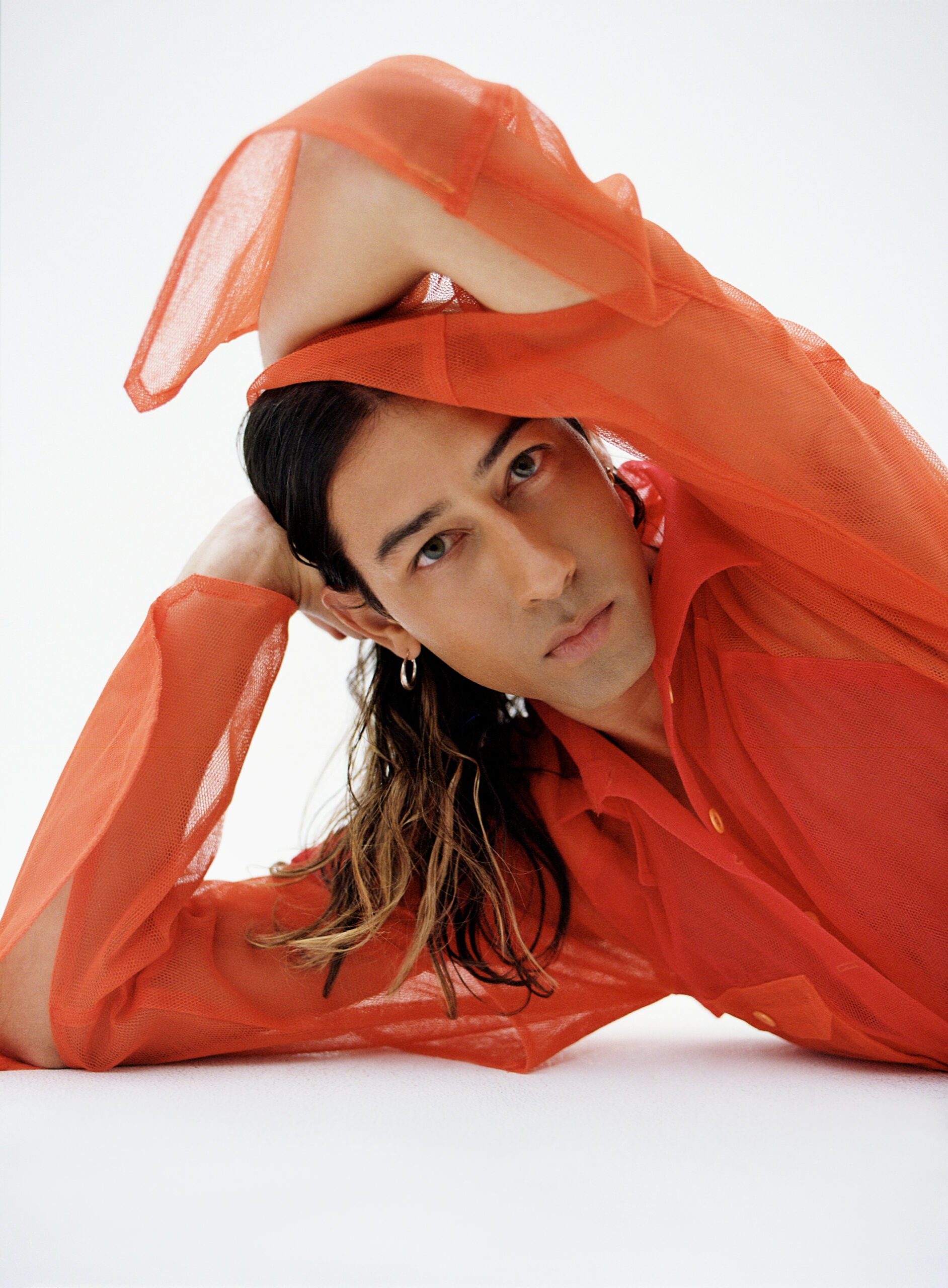
Bainbridge later began using they/them pronouns, but I ask today whether they think their understanding of their gender is still evolving? “Yeah, I think so. I think if you have decided to reject the binary both in sexuality and race, as I have, it’s quite easy to adopt a similar position in gender terms.” Hearteningly, Bainbridge adds that their gender identity “doesn’t give me much dissonance really—in some ways it gives me quite a lot of comfort because it just makes sense to me.”
Though Bainbridge says their financial problems aren’t yet fully resolved, they appear to be in a super-positive place both personally and professionally. Bainbridge has been with partner Phoebe for four years, and says their relationship was “an enormous source of strength” during the tougher times. “Now, the thing that I really love about music isn’t a greater level of success or notoriety, but more of a long-term sense of stability,” they say. “I just want to be able to do this in a way that’s sustainable and doesn’t take me away from my friends and family too often but allows me to do something creatively fulfilling.”
As we get ready to leave the unassuming establishment as it begins to fill up with after-work drinkers, Bainbridge touchingly adds, “You know, I’m grateful and surprised to still be doing this ten years after I started.”