Your bag is empty.

Impeachment feels like it is only days away but we’ve been fooled before
On the first week of the public impeachment hearings, the bars in Washington D.C. opened early, showing the spectacle on all their screens and pushing out drinks with cliched names like subpoena colada. But they were empty during the first hearing, which featured diplomats William Taylor and George Kent. In the absence of an interested public, reporters wandered around the pubs, asking each other for interviews.
It felt like Washington was exhausted by the event— we have been in an impeachment slog for the past two months. We knew for the past year that the House would impeach the president but now that the process is underway, we often find ourselves exhausted with the machinations.
But that may be just another symptom of our echochamber. Over 13 million Americans watched the hearing with Kent and Taylor; the diplomats brought in more viewers than Robert Mueller.
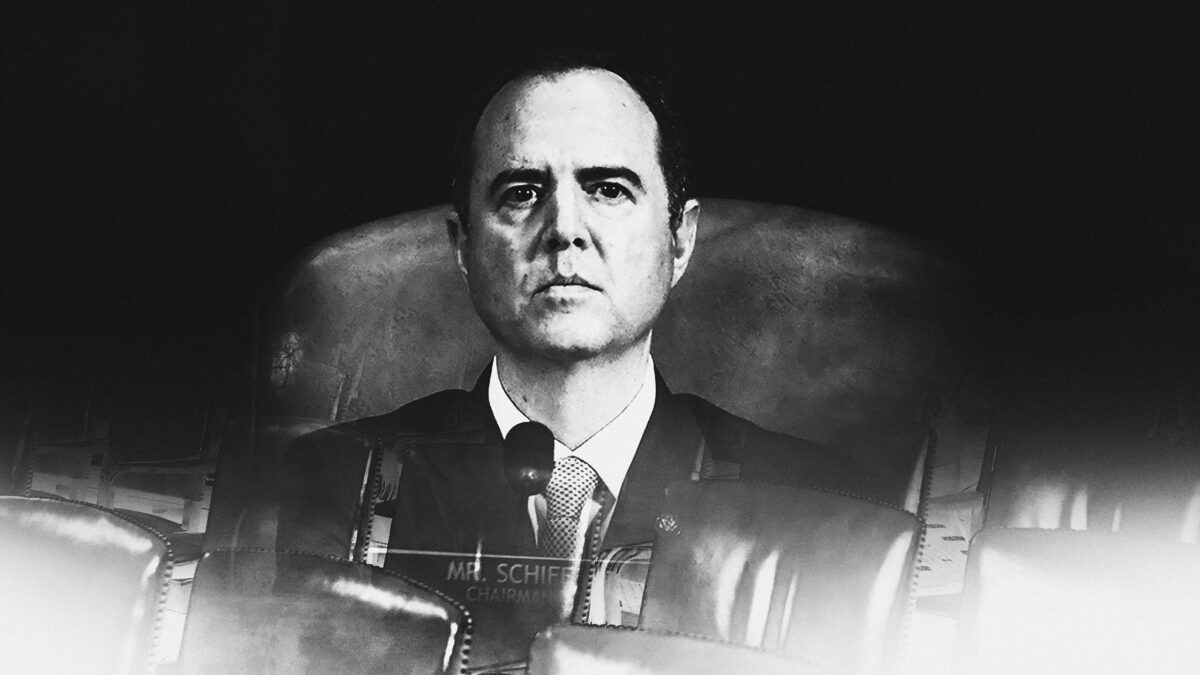
For Republicans, this is a story of moving goalposts, of trying to reframe the narrative around something always further from Donald Trump. When House Intelligence Chairman Adam Schiff began closed testimonies, Republicans demanded that Schiff release the transcripts of those interviews. When Schiff began releasing the transcripts, Republicans demanded that the hearings be held in open session. During the open session hearings, they demanded that the whistleblower testify. The theme of their defense of the president is a driving toward some impossible goal, forcing the Democrats to play Sisyphus, pushing an impeachment boulder along Pennsylvania Avenue.
On the morning that Kent and Taylor appeared before Congress, a Republican source sent Playboy the talking points passed around by House Minority Leader Kevin McCarthy. The Republican leader titled his memo ‘Impeachment 306’ — a nod to the number of electoral college votes that Donald Trump earned in 2016. The subheader on the memo read your guide to the Democrats’ efforts to undo the 2016 election. Those talking points focused on the July 25th phone call in which Donald Trump asked Ukranian president Volodymyr Zelensky to investigate Joe Biden. That phone call has been ripening at the center of impeachment, every witness who has appeared before the committees has been asked about the conversation and about the circumstances that surrounded Trump’s call with Zelensky.
The impeachment hearings are held in a massive room on Capitol Hill with eagles sculpted near the ceiling, Playboy sits in the front row on the side of the room, a few feet from the heavy doors where the witnesses pass through, encased in their teams of lawyers. There are a pair of television cameras in the back and the room is so cold that most of the reporters shiver beneath winter coats as they listen to Chairman Schiff trying to control the Republicans who interrupt the proceedings to interject one of the talking points sent around by McCarthy. If we consider only the optics, the hearings feel like every other hearing with a star witness. There is the long desk with the small white paper bearing the name of the witness who sits usually with their hands crossed and there are the small bottles of water on the table. Sitting on the floor between the witness and the lawmakers, there is a bank of scruffed photographers with their cameras that look like telescopes.
We knew for the past year that the House would impeach the president but now that the process is underway, we often find ourselves exhausted with the machinations.
During the first week, all of the witnesses were career diplomats. In his talking points, McCarthy pushed themes that might color those diplomats as unreliable narrators. The memo reads that Ambassador Bill Taylor is “not an expert fact witness and did not have firsthand knowledge of any of the key facts in question.” Of Kent, the memo says “Kent does not have firsthand knowledge regarding much of his testimony.”
Just before Taylor and Kent settled behind that long, wooden table with the white name tag, Donald Trump tweeted “NEVER TRUMPERS.” But there’s a small chance that many unbiased viewers bought into the narrative that Taylor and Kent are actively trying to take down the president. Congressman Eric Swalwell asked both men if they are “never Trumpers” and both men answered calmly, which seems the ideal way to counter a Twitter lashing from the Oval Office. Kent told Swalwell “I am a career nonprofessional who serves whatever president is duly elected and carries out the foreign policies of the United States.”
The last testimony of the first week is among those that you will read about when you read the books that are written about this process. That featured Marie Yovanovitch, a small woman with short, auburn hair and small glasses. She spoke softly, often pushing out one-word answers, and unlike most witnesses before Congress, she rarely whispered something to her lawyers, which made her seem even more alone behind that long, wooden table.
Early in Yovanovitch’s hearing, President Trump attacked her on Twitter, writing that “everywhere Marie Yovanovitch went turned bad.” His remarks crippled Republicans, who spent the next few hours going of their way to thank the longtime diplomat for her service. Chairman Adam Schiff read the president’s tweet just after it appeared and accused the White House of intimidating a witness.
During a break in the hearing, Playboy asked Intelligence Committee member Congresswoman Jackie Speier if this amounted to “witness tampering in real-time” — the congresswoman answered simply “yes.” Speier added later that the witnesses, “are nonpartisan, they are not engaged in political action or activity.”
Later in our conversation, I asked Speier about the veracity of the Republican talking points of the witnesses being non-credible, she said “nothing sticks, because you’ve got a total now — between the three of them — of over a hundred years of service to this country.”
Though Kent and Taylor were essential witnesses in this trial, Yovanovitch was the unwanted star. The New Yorker wrote that her testimony “cut through the rote posturing and partisanship to get at an essential fact … Trump is not on the brink of impeachment because of some arcane dispute over differing philosophies about anti-corruption policies in Ukraine.” During the hours in which she appeared before the House Intelligence Committee, Yovanovitch seemed to win over the public through a series of subtle behaviors that are most effective in the specific moment in which she found herself. Here was a quiet woman, a career diplomat who has never sought the spotlight, under attack by the President of the United States. At the end of her hearing, the crowd in the back of the room stood and applauded, drowning out the protests of a bellowing Republican congressman.
Though Kent and Taylor were essential witnesses in this trial, Yovanovitch was the unwanted star.
Donald Trump has tried to reframe his conversation as some sort of referendum on Ukranian corruption and the Republicans have attempted to push a narrative the president was simply interested in corruption in Ukraine. But Taylor, Kent and Yovanovitch all testified that the conversation is outside of an investigation into corruption in Ukraine — through their testimonies, they argued to the legitimacy of Congress’ investigation of a targeted attempt by the president to get the Ukrainians to peddle dirt on Joe Biden. And Republicans have failed to address that accusation, instead they have tried to call attention to Joe Biden, a tactic that does not cast innocence on their narrative.
Donald Trump will be impeached in the House of Representatives, another of the Republicans talking points is that the Democrats have been aimed at impeaching the president since he was elected. But that’s a successful talking point only on paper — the Democrats are impeaching Trump on a conversation that he had in the Oval Office, a conversation in which he used the power of the presidency to his personal advantage. The Democrats are impeaching Trump on a conversation that concerns the 2020 election.
Eventually, this moves to the Senate where the president will be acquitted. But it’s difficult to predict exactly how this will all play out and on what sort of timeline the impeachment will unfold. If there is any constant to the behavior of Donald Trump, it’s that he makes unorthodox and ridiculous decisions without warning. On the Monday following the testimony of Yovanovitch, he continued in that tradition, suggesting that he would be open to testifying before Congress. It’s unclear how a Trump testimony might materialize. Some have suggested that he might submit a written testimony and nobody seriously believes that Trump will appear before Congress to testify.
There is a whispered speculation, a sort of Democratic fever dream that Trump might lose a few Republican Senators when the impeachment vote slinks into the Senate. Among the Republican Senators most likely to vote to impeach the president is Mitt Romney. Asked by reporters what he thinks of Trump’s suggestion that he’s willing to testify, Romney said “it’s entirely his decision.”
As winter settles on the nation’s Capitol, the days are growing shorter, each day we leave Capitol Hill in the darkness. We watch the lawmakers moving through the ancient hallways with the so-called shadow of impeachment hanging over them. But it is not really a shadow, it’s something deeper than that, impeachment seeps into every conversation; every bill that passes by the floor of the House over the past weeks is largely ignored because it’s not the bill on impeachment and this is furthered because nearly every bill that the House passes is ignored in the Senate where Mitch McConnell silences every move that doesn’t nourish his archaic beliefs.
And so we wait and we shiver in different places, in hearing rooms and those empty bars where reporters ask each other what they’ve heard. Impeachment feels like it is only days away but we’ve been fooled before.