Your bag is empty.
Why internet etiquette is a necessary evil in today's world
Maybe. If you’re a celebrity.
Celebrities: they’re not like us. They aren’t planning the next three months of their lives based on when a series of meager $200 checks could or could not land in their mailbox. They’re not skimping on takeout, opting instead for a diet of toast and hummus to get by. And they’re certainly not discontinuing mental health treatment because they just can’t swing that extra $75 this week. Celebrities aren’t like you and I, because they’re rich in a way most of us could never comprehend—just look at their skin, their hair, their cars, their injections.
Honestly, one of the only things we have in common with celebrities is social media, where even if you have a modest following, you’re scrutinized day in and day out—especially if you’re a woman. In our divisive online world where we sort everything that has happened, is happening or will happen into “good” and “bad,” journalists are “bad” now…and not just to the far right. That’s why this week’s flurry of anti-critic tweets have caught many of us off guard.
It all began with Lizzo on Tuesday. Just after the release of her major label debut, Cuz I Love You, she received compliment after compliment from music reviewers, and then Pitchfork gave her a 6.5 out of 10. In response, the artist (who, I must admit, I wholeheartedly love) went to Twitter to proclaim, “PEOPLE WHO ‘REVIEW’ ALBUMS AND DONT MAKE MUSIC THEMSELVES SHOULD BE UNEMPLOYED.” While she likely didn’t mean to get anyone fired, she did seem to be summoning discourse around whether or not artists could ever be truly understood by journalists, and vise versa, following her statement with “THIS IS AN INVITATION TO ALL MUSIC JOURNALISTS TO KICK IT IN THE STUDIO WITH ME FOR MY NEXT ALBUM! I’d like to understand your world as much as you can understand mine.”
Smaller personalities who become effigies for celebrity angst are attacked in droves, threatened with violence and rape, and must somehow evade or simply wait out incoming snark, name-calling, misogyny and racial slurs.
People online lost it. What, maybe, Lizzo doesn’t know is that the average music critic is likely freelance (so, unemployed) and makes less than $100 per review, $50 if they’re lucky. Lizzo’s tweet was flagged by media as intrinsically bad and misinformed, and in her replies, hundreds insisted that she delete her verdict and apologize. She didn’t. She is known to clap back online, and for good reason—she’s changing what it means to be a woman in pop and is tirelessly harassed about her body, sexuality and blackness.
Lizzo is also relatively new to the fame game and assuredly was using her platform to vent (it takes a while to realize some fleeting angry thoughts are best left unsaid), unlike Ariana Grande, who Wednesday was accused of punching down when she stood up for her and Justin Bieber’s Coachella performance in a series of since-deleted tweets.E! Nightly Pop‘s TV host Morgan Stewart called him out for lip syncing with Grande during an April 21 Coachella performance. She also tastelessly pokedfun at his acne during the show, during a period he has been open and honest about his mental health woes (a proven cause for acne). Stewart plausibly assumed the pop superstar would never watch Nightly Pop, let alone that particular episode.
And if he did happen to catch the clip, why would he give a fuck what a lowly TV host has to say about his craft or his face? Fair, but he did see it, and he cared enough to tweet directly at Stewart, in clear view of his 105 million followers, saying, “imagine if you spent even half the time you spend laughing at other peoples expense actually building people up and encouraging people how much positivity you could bring.”
Revealing the name and social media handle of an adversary who happens to be in a far lesser position is, on its own punching down. Then, to make matters worse, Grande got involved.
Grande tweeted a uniquely passive-aggressive response in defense of Bieber: “people are so lost. one day everybody that works at all them blogs will realize how unfulfilled they are and purposeless what they’re doing is and hopefully shift their focus elsewhere.. i can’t wait for them to feel lit inside.” Several cutesy, Grande-esque emojis littered the end of her comment. Journalists didn’t take kindly to her words, as “blogging” is a pretty patronizing catchall for the craft of writing (and none of us feel fulfilled or lit inside), and Stewart is a TV host, not a blogger. What bloggers Grande was mad at, we’ll never know, but her saga of tweets (combined with Bieber’s) was surely enough to run Stewart offline for a while.
Stewart wasn’t the only one facing the vitriol of Grande’s fans, whom she unleashed when she tweeted her disapproval of modern media. This is objectively the greatest danger associated with punching down as a celebrity with massive, massive influence; smaller personalities who become effigies for celebrity angst are attacked in droves, threatened with violence and rape, and must somehow evade or simply wait out incoming snark, name-calling, misogyny and racial slurs in their inboxes and direct messages.
Freelance writer Roslyn Talusan quote-tweeted Grande with her own criticism of the songstress with “you fucking realize bloggers/writers are creators, right? just because we don’t sing or dance shitty choreo or culturally appropriate for profit doesn’t make our craft any less valid. suck on my balls.” Her timeline is now in shambles; something of an online warzone as Talusan continues to post the threats she’s received and screenshots of her personal discourse with Grande through direct messages, encouraging the pop star to attempt to suppress her fans’ rage. Grande, while somewhat apologetic, dismissed Talusan’s concerns about her fandom’s gross charge by insisting her fans are simply “upset and passionate,” and “reacting with similar energy to what they’ve read.”
What’s even more upsetting about the exchange between Talusan and Grande is that writers produce so much positive content in favor of celebs like Grande, who herself congratulated Talusan on a piece the journalist recently wrote about Britney Spears’ mental health as a consistent and tired, decades-long punchline. For all the positive content produced by writers gassing up or defending entertainers’ choices and crafting compassionate op-eds in their favor, is it really worth clapping back at the occasional snub? While it’s unclear what happens in Scooter Braun’s group chat, Grande deleted the nasty tweets, while Bieber’s are still up.
No doubt watching the chaos ensue online, popular recording engineer and producer Alex Tumay tweeted out an entirely valid point: “Everyone who works in music live extremely uncertain existences which lead to unnaturally high stress levels, terrible sleep patterns, and short fuses. It’s important to remember that everyone from artists to AnRs to critics are still human beings.” But is clapping back even necessary when you’re famous? Of course, a celebrity’s feelings are as easily hurt as anyone’s (yes, they’re human beings too, just profoundly rich ones) and people who live life under a microscope often feel like they’re at the center of smear campaigns.
Why craft or post such an astoundingly incorrect take on two normal people trying to do their jobs (and doing it well, I should add)?
And, I get it, who can famous people trust if not other celebrities? But the rich and famous also exist in bubbles of their fandoms that have elevated them to what that best resembles a cult of personality—those who disagree, dislike, or criticize an artist or their craft is automatically declared an enemy of the state, and thus, disposed of by the artist’s ruthless and relentless (and usually anonymous) fans. And the difference between clapping back at “the haters” on social media and punching down at media figures is that the majority of the folks celebrities spar with online are anonymous and lacking a following. They honestly just want to be noticed, even if it’s at their expense. Anonymous tweeters can’t be bullied for anything other than bad manners, ignorance, and being too scared to show the face behind the keyboard.
But when you have a fair following and work in media with a blue check next to your name, you really are the easiest target. You’re also most likely just as broke as the fans in your messages are saying you are. Contrary to an oddly held misconception, writers don’t make a ton of money and journalism is a particularly cruel medium. Writers envy celebrities—many of whom have quit social media and instead have their accounts kept up by assistants and managers. But journalists can’t log off and keep their careers. Targeted harassment impacts the livelihoods of writers, too, because they need to be online, as ill-natured as it is, in order to do their jobs and get paid. And they must consistently search for witty, entertaining ways to stand out.
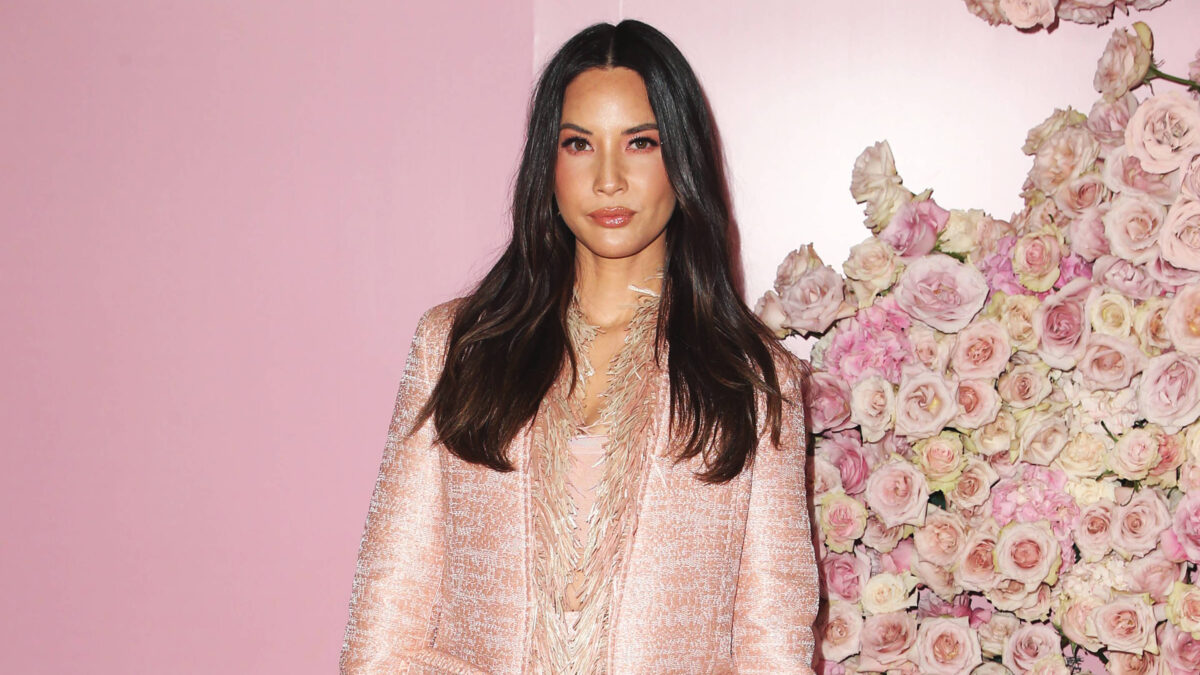
That’s where Olivia Munn totally missed the mark. On Wednesday night she uploaded a massive and petty post calling out fashion blog Go Fug Yourself, written and founded by Heather Cocks and Jessica Morgan, for scrutinizing her clothes. Last week, the blog said Munn’s designer pantsuit looked “like she got roped into making a sequel to American Hustle that ended up going straight to on-demand.” Their criticism was of the fashion itself, not Munn or her physical attributes. Munn claims, through several grueling paragraphs, that Cocks and Morgan are “part of the problem,” stating, “the world woke up in 2017 and you kept sleeping.”
Munn likens any analysis of her outfits to the #MeToo movement several times. She compares her grief over being featured on the blog to a group of girls from Maryland’s Bethesda-Chevy Chase High School—the ones who recently gained nationwide acclaim for having a constructive conversation on toxic masculinity with their misbehaving male peers. The difference here is painfully clear: Munn’s clothes were playfully made fun of by a very popular, witty fashion critique from two female writers (known for purposefully never commenting on appearance or weight and focusing only on fashion as art), and the girls at BCC High School were subject to something called rape culture.
Munn’s punching down highlights her privilege more than anything else. Why craft or post such an astoundingly incorrect take on two normal people trying to do their jobs (and doing it well, I should add)? While Grande and Munn are both subject to fair amounts of criticism, I’d argue they’re both beloved entertainers and surely don’t need to prove their worth (figuratively or monetarily) at a writer’s expense. And unlike Lizzo, they’ve been in the spotlight long enough to know better. It’s cliché to say “if you can’t take the heat, get out of the kitchen,” but if celebs are directing their anger at women who may never make even one-eighth of their income, they should maybe follow the paths of fellow famous folks who have either quit social media or handed it over to their management, like Adele, Emma Stone or Rihanna.
What’s of utmost importance is that every person (with the exception of Bieber) in this day’s long debacle is a woman, and lowly critic or celebrity aside, we should all be punching up, not down. The only way to move forward as women/non-binary persons in male-dominated spaces (entertainment and media are both unequivocally male—we probably have more in common than we’d initially anticipate) is to challenge the male-run institutions that force us into positions we feel constantly attacked within and that cause us to feel we must not only compete, but tie our success to wealth and status instead of our respective crafts.
We all deserve to feel lit inside, but we’re working while women. Let’s channel our anger in a different direction.